Integral Calculus के advanced applications में कई बार ऐसे regions आते हैं जो circle, semicircle, sector, annulus या किसी curved boundary से bounded होते हैं। ऐसी स्थिति में Cartesian coordinates में integration करना कठिन हो सकता है। तब coordinates को बदलकर problem को सरल बनाया जाता है। इसी प्रक्रिया को Transformation from Cartesian to Polar Coordinates कहा जाता है।
इस topic का मुख्य उद्देश्य यह समझना है कि और की जगह और का प्रयोग कब और कैसे किया जाता है। यह transformation विशेष रूप से उन questions में बहुत useful होता है जहाँ region circular symmetry रखता हो।
Cartesian Coordinates का idea
Cartesian system में किसी point की position से बताई जाती है।
यहाँ -coordinate point की horizontal distance बताता है और -coordinate उसकी vertical distance बताता है।
उदाहरण के लिए यदि कोई point है, तो इसका अर्थ है कि वह point origin से 3 units right और 2 units ऊपर है।
लेकिन कई बार किसी point को उसकी origin से दूरी और x-axis से बने angle के आधार पर बताना अधिक convenient होता है। यही idea polar coordinates का आधार है।
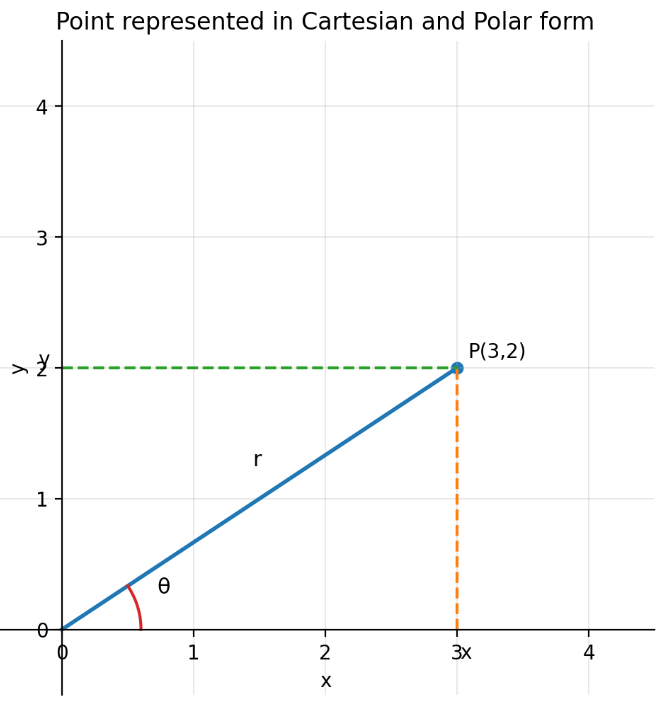
Graph: Point represented in Cartesian and Polar form
Polar Coordinates का अर्थ
Polar system में किसी point की position दो quantities से व्यक्त की जाती है:
- , जो origin से point की दूरी है
- , जो positive x-axis के साथ बनने वाला angle है
अर्थात किसी point को के रूप में लिखा जाता है।
यहाँ radial distance कहलाती है और angular position कहलाती है।
इस system की सबसे बड़ी विशेषता यह है कि circle और related regions को इसमें बहुत आसानी से व्यक्त किया जा सकता है।
Cartesian और Polar coordinates के बीच relation
यदि किसी point के Cartesian coordinates हों और polar coordinates हों, तो दोनों के बीच relation होता है:
और inverse relation होता है:
यही basic formulas इस topic की foundation हैं।
इनकी सहायता से किसी भी point को Cartesian से Polar या Polar से Cartesian form में बदला जा सकता है।
यह transformation क्यों जरूरी है
अब सबसे important बात समझिए।
कुछ integrals Cartesian form में बहुत कठिन दिखाई देते हैं, लेकिन जैसे ही region को polar form में लिखा जाता है, वही problem काफी आसान हो जाती है।
विशेष रूप से निम्न प्रकार के regions polar coordinates में बहुत सरल हो जाते हैं:
- circle
- semicircle
- quarter circle
- sector
- annular region
- regions involving
इसका कारण यह है कि Cartesian system में circle की equation quadratic होती है, जबकि polar system में वही अक्सर के रूप में बहुत सरल बन जाती है।
Differential area element का transformation
Cartesian coordinates में small area element होता है:
लेकिन polar coordinates में यही area element बदलकर होता है:
यहाँ extra factor बहुत महत्वपूर्ण है।
इसी को कई बार Jacobian factor भी कहा जाता है।
Students अक्सर यही factor भूल जाते हैं, और यही इस topic की सबसे common mistake है।
इसलिए जब भी Cartesian से Polar transformation करें, केवल और को बदलना ही पर्याप्त नहीं है, बल्कि को भी में बदलना जरूरी है।
Circle का simplest example
मान लीजिए equation है:
अब Cartesian form में यह radius 2 वाला circle है।
लेकिन polar form में
इसलिए यह बन जाएगा:
अर्थात,
यहाँ हम देखते हैं कि Cartesian में जो equation curved form में थी, वही polar में बहुत simple हो गई।
इसी कारण polar coordinates circle-based regions के लिए अत्यंत useful माने जाते हैं।
Example: Point को Cartesian से Polar में बदलना
मान लीजिए point है:
अब polar form निकालने के लिए पहले r निकालते हैं:
अब angle के लिए
इसलिए
अतः point का polar form होगा:
यह example basic conversion को स्पष्ट करता है।
Example: Polar से Cartesian में बदलना
मान लीजिए point दिया है:
अब formulas use करेंगे:
अतः Cartesian coordinates होंगे:
इस प्रकार polar से Cartesian conversion भी सीधा formula-based होता है।
Region को polar form में कैसे समझें
अब केवल point conversion जानना पर्याप्त नहीं है।
Integration में सबसे important part region को polar form में लिखना होता है।
यदि region quarter circle हो, जैसे first quadrant में radius 2 वाला circle, तो Cartesian form में यह region इस प्रकार लिखा जा सकता है:
लेकिन polar form में यही region बहुत सरल हो जाता है:
यही polar transformation की असली strength है।
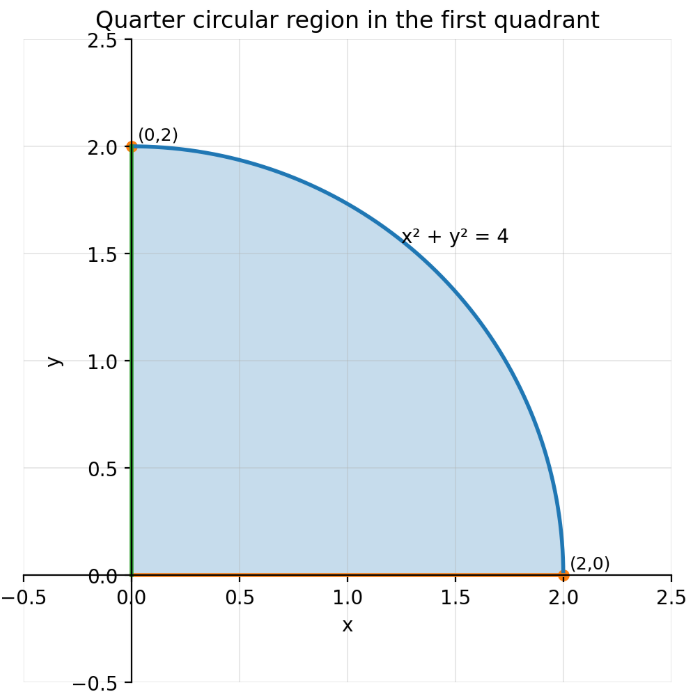
Graph: Quarter circular region in the first quadrant
Example: Circular region का area by polar coordinates
अब एक important example देखते हैं।
मान लीजिए हमें first quadrant में radius 2 वाले quarter circle का area निकालना है।
Polar form में region है:
अब area होगा:
Polar form में
पहले के respect में integrate करें:
अब के respect में:
अतः quarter circle का area है:
यह result सही भी है, क्योंकि radius 2 वाले full circle का area होता है और quarter circle उसका भाग है, यानी
Example: Double integral को polar form में बदलना
मान लीजिए हमें evaluate करना है:
जहाँ region है:
यह unit disk है।
अब polar form में
और
इसलिए integral बन जाएगा:
पहले inner integral:
अब outer integral:
अतः answer है:
यह example बहुत महत्वपूर्ण है, क्योंकि इसमें साफ दिखाई देता है कि जैसा expression polar coordinates में कितना simple हो जाता है।
Example: Gaussian type integral का basic idea
कुछ advanced questions में integrand में भी आता है, जैसे:
यदि region circular हो, तो polar form में यह बन जाता है:
अब Cartesian की तुलना में यह form काफी convenient हो जाती है।
इसलिए जैसे ही integrand या region में दिखाई दे, student को polar coordinates के बारे में सोचना चाहिए।
Polar transformation में limits कैसे लिखें
इस topic का सबसे महत्वपूर्ण practical हिस्सा limits लिखना है।
Polar form में limits सामान्यतः दो प्रकार की होती हैं:
- की limits, जो origin से दूरी बताती हैं
- की limits, जो angle का range बताती हैं
उदाहरण के लिए:
- full circle:
- upper semicircle:
- first quadrant:
- sector:
और की limits region की inner और outer radial boundaries से मिलती हैं।
यदि region origin से शुरू होकर circle तक जाता है, तो की lower limit प्रायः होती है।
सबसे common mistakes
इस topic में students कुछ common mistakes करते हैं।
सबसे पहली गलती को लिख देना है, जबकि सही form होती है।
दूसरी गलती और को गलत substitute करना है।
तीसरी गलती की limits गलत लेना है, विशेषकर quadrant वाले questions में।
चौथी गलती region को graph से समझे बिना limits लिखने की होती है।
इसलिए इस topic में formulas याद रखने के साथ-साथ region की geometry समझना भी बहुत जरूरी है।
Questions solve करने की सामान्य विधि
Polar transformation वाले questions में सबसे पहले यह देखना चाहिए कि region circular type का है या नहीं।
फिर integrand में जैसे expressions हैं या नहीं, यह check करना चाहिए।
उसके बाद region का graph mentally या rough sketch से समझना चाहिए।
फिर और की जगह polar expressions रखनी चाहिए।
साथ ही को में बदलना चाहिए।
अंत में new limits के साथ integral solve करना चाहिए।
इस topic की मुख्य बात
Transformation from Cartesian to Polar Coordinates का मुख्य उद्देश्य difficult integrals को simple बनाना है।
जब region circular हो या integrand में प्रकार का expression हो, तब polar coordinates बहुत powerful tool बन जाते हैं।
यह topic केवल coordinate change नहीं है, बल्कि integration को सही coordinate system में करने की technique है।
इसी कारण यह chapter Multiple Integrals, Area, Volume, और advanced applied mathematics के लिए बहुत important माना जाता है।