Integral Calculus का यह भाग बहुत महत्वपूर्ण है, क्योंकि यहाँ integration का प्रयोग केवल area तक सीमित नहीं रहता, बल्कि इससे solid का volume और surface area भी निकाला जाता है।
जब कोई plane region किसी axis के about घुमाया जाता है, तब एक three-dimensional solid बनता है। उस solid का volume और उसकी curved surface, दोनों को integration की सहायता से ज्ञात किया जा सकता है।
यह topic geometrical applications of integration का advanced part माना जाता है। यहाँ student को केवल formula याद नहीं रखना होता, बल्कि यह भी समझना होता है कि region क्या है, rotation किस axis के about हो रहा है, radius क्या है, और किस quantity का calculation करना है।
Volume का basic idea
जब किसी bounded region को किसी axis के about rotate किया जाता है, तो एक solid of revolution बनता है।
अब इस solid का volume निकालने के लिए हम उसे बहुत छोटे-छोटे discs या washers के रूप में सोचते हैं। फिर उन सभी छोटे parts का total integration की मदद से लेते हैं।
यही volume of revolution का मूल विचार है।
यदि region curve , x-axis, तथा lines और से bounded हो, और इसे x-axis के about rotate किया जाए, तो हर vertical strip एक circular disc बनाती है।
इसलिए volume का formula होता है:
यह formula disc method का सबसे basic form है।
Example: x-axis के about volume
मान लीजिए region curve
x-axis, , और से bounded है। अब इस region को x-axis के about rotate किया जाता है।
तब volume होगा:
लेकिन यहाँ , इसलिए
अब integration करें:
अतः required volume है:
यह question volume of revolution का सबसे standard example है।
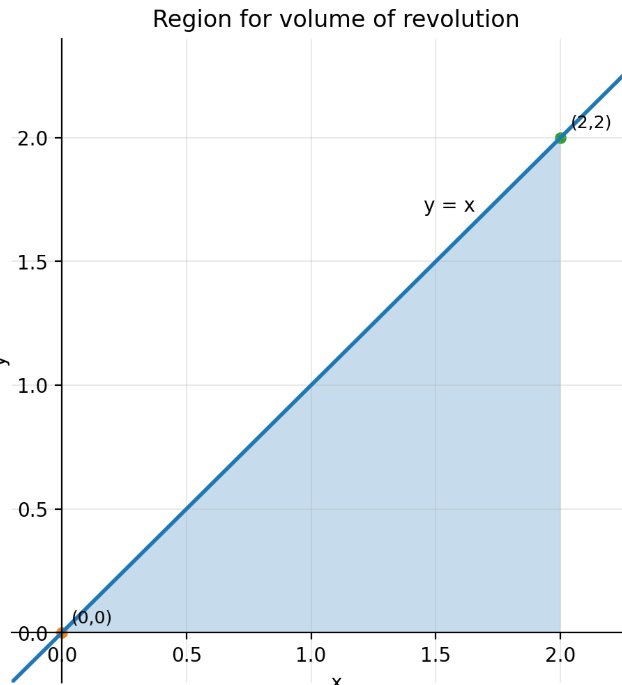
Graph: Region for volume of revolution
Washer Method का idea
हर बार solid पूरी तरह भरा हुआ disc नहीं बनाता।
कई बार region दो curves के बीच bounded होता है। जब ऐसे region को rotate किया जाता है, तो बीच में hollow part भी आ सकता है। तब washer method का use किया जाता है।
यदि outer radius और inner radius हो, तो volume होगा:
यहाँ ध्यान देने वाली बात यह है कि outer radius हमेशा बड़े curve से और inner radius छोटे curve से आता है।
Example: Washer method
मान लीजिए region curves
के बीच है, जहाँ से तक region लिया गया है, और इसे x-axis के about rotate किया जाता है।
अब outer radius होगा और inner radius होगा
इसलिए volume होगा:
अतः required volume है:
इस example में student को outer और inner radius carefully identify करना होता है।
y-axis के about volume
यदि किसी region को y-axis के about rotate किया जाए, तो setup बदल जाता है।
कुछ cases में के respect में integration करना आसान होता है, और कुछ cases में shell method अधिक convenient होता है।
यदि curve form में हो और rotation y-axis के about हो, तो volume का basic form हो सकता है:
यहाँ radius होगा, क्योंकि rotation y-axis के about हो रहा है।
Example: y-axis के about volume
मान लीजिए curve
और से तक region y-axis के साथ bounded है।
यदि इस region को y-axis के about rotate करें, तो volume होगा:
लेकिन यहाँ , इसलिए
अब integration करें:
अतः required volume है:
यह example यह दिखाता है कि axis बदलने पर variable setup भी बदल सकता है।
Surface of Revolution का basic idea
अब surface की बात करते हैं।
जब किसी curve को किसी axis के about rotate किया जाता है, तो केवल solid ही नहीं बनता, बल्कि उसकी curved outer boundary भी बनती है। इसी को surface of revolution कहा जाता है।
यदि कोई curve , से तक दी गई हो और इसे x-axis के about rotate किया जाए, तो surface area का formula होता है:
यहाँ दो बातें ध्यान देने योग्य हैं:
- circular path की length को represent करता है
- small arc length element को represent करता है
इन्हीं दोनों का product small surface element देता है।
Example: x-axis के about surface area
मान लीजिए curve है:
और हमें से तक curve को x-axis के about rotate करने पर बनने वाली surface area निकालनी है।
सबसे पहले derivative निकालेंगे:
अब formula में रखेंगे:
यही required surface area का correct setup है।
कई surface area वाले questions में expression setup तक पहुँचना ही सबसे important step होता है। कुछ cases में exact value निकाली जाती है, और कुछ में final integral form ही acceptable होती है।
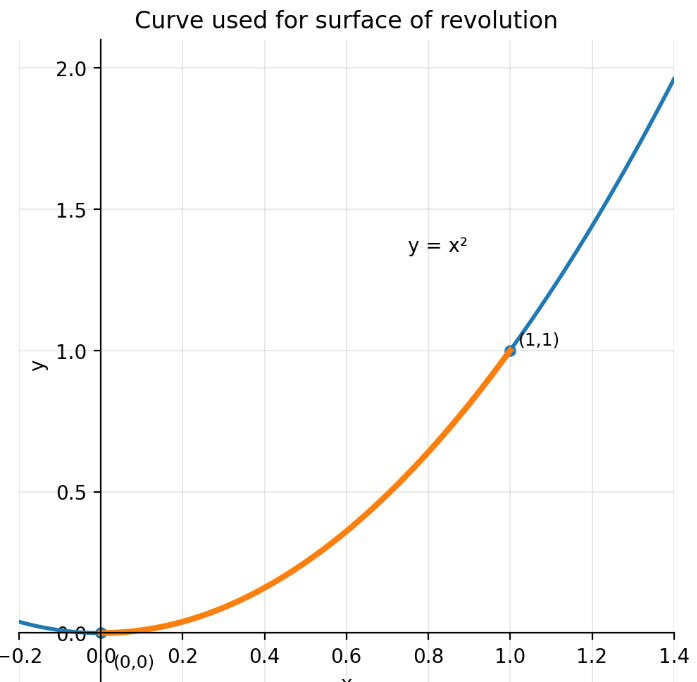
Graph: Curve used for surface of revolution
y-axis के about surface area
यदि वही curve y-axis के about rotate की जाए, तो formula बदल जाएगा।
ऐसी स्थिति में radius x होगी, इसलिए surface area का formula होगा:
यहाँ axis of rotation बदलने से radius बदल गया है।
इसी कारण surface वाले questions में यह पहचानना सबसे जरूरी होता है कि rotation किस axis के about हो रहा है।
Example: y-axis के about surface area
मान लीजिए curve
और limits से तक दी गई हैं। यदि इसे y-axis के about rotate करें, तो
अब formula होगा:
अतः required surface area है:
यह example यह स्पष्ट करता है कि curve simple हो, तब surface formula से exact value आसानी से निकाली जा सकती है।
Volume और Surface में अंतर
यहाँ एक concept बहुत clear होना चाहिए।
Volume और surface area दोनों rotation से जुड़े हुए हैं, लेकिन दोनों की geometrical meaning अलग है।
- Volume solid के भीतर का occupied space बताता है
- Surface area solid की outer curved boundary बताता है
Volume के formula में radius का square आता है, क्योंकि हम circular cross-section का area ले रहे होते हैं।
Surface area के formula में radius के साथ arc length element आता है, क्योंकि हम curved boundary का measurement कर रहे होते हैं।
इसीलिए student को हर question में पहले यह पहचानना चाहिए कि पूछा क्या गया है—volume या surface।
किस question में कौन-सा formula लगेगा
यदि region rotate हो रहा है और solid के अंदर की जगह पूछी गई है, तो volume का formula लगेगा।
यदि curve rotate हो रही है और outer curved part पूछा गया है, तो surface area का formula लगेगा।
इसीलिए statement को ध्यान से पढ़ना जरूरी है:
- Volume of the solid generated → volume
- Surface area generated by revolving the curve → surface area
यह छोटी-सी language difference exam में बहुत important हो जाती है।
Questions solve करने की सामान्य विधि
Volume और surface area वाले questions में यह method follow करनी चाहिए।
सबसे पहले region या curve को ठीक से समझना चाहिए।
फिर यह पहचानना चाहिए कि rotation x-axis के about है या y-axis के about।
उसके बाद radius तय करना चाहिए।
यदि volume पूछा गया है, तो disc या washer method के अनुसार formula बनाना चाहिए।
यदि surface पूछा गया है, तो derivative निकालकर surface formula apply करना चाहिए।
अंत में definite integral को solve करना चाहिए।
सबसे common mistakes
इस topic में students प्रायः कुछ common mistakes करते हैं।
सबसे पहली गलती volume और surface area के formula को आपस में मिला देना है।
दूसरी गलती radius गलत लेना है।
तीसरी गलती axis of rotation को ignore कर देना है।
चौथी गलती surface area में derivative का part भूल जाना है।
और पाँचवीं गलती washer method में outer aur inner radius को उल्टा लिख देना है।
इसलिए इस chapter में graph और geometric imagination बहुत जरूरी है।
इस topic की मुख्य बात
Volume and Surfaces integration के सबसे महत्वपूर्ण geometrical applications में से हैं।
इनकी सहायता से हम किसी rotated region का exact volume और किसी rotated curve की exact surface area ज्ञात कर सकते हैं।
यदि student region, axis aur radius को सही समझ ले, तो यह chapter बहुत logical और easy हो जाता है।
यह topic आगे engineering mathematics, mechanics, applied geometry, और advanced calculus में भी बहुत useful सिद्ध होता है।