Integral Calculus का यह भाग बहुत महत्वपूर्ण है, क्योंकि यहाँ integration का प्रयोग केवल area तक सीमित नहीं रहता, बल्कि इससे curve की लंबाई और solid का volume भी निकाला जाता है।
इस topic में हम यह समझते हैं कि किसी curve का actual length कैसे निकाला जाता है और किसी bounded region को किसी axis के about घुमाने पर बनने वाले solid का volume किस प्रकार प्राप्त किया जाता है।
यह chapter विशेष रूप से उन students के लिए important है जो integration के geometrical applications को गहराई से समझना चाहते हैं। यहाँ formulas को केवल याद करना पर्याप्त नहीं होता, बल्कि यह समझना भी जरूरी होता है कि कौन-सा formula किस स्थिति में apply होगा।
Length of a Curve
जब हमें किसी straight line segment की लंबाई निकालनी होती है, तब distance formula पर्याप्त होता है।
लेकिन यदि curve सीधी रेखा न होकर मुड़ी हुई हो, तो उसकी actual length निकालने के लिए integration का सहारा लेना पड़ता है।
इसी process को arc length कहते हैं।
यदि कोई curve
के रूप में दी गई हो, और हमें से तक उसकी लंबाई निकालनी हो, तो उसका formula होता है:
यह formula इस विचार पर आधारित है कि curve को बहुत छोटे-छोटे line segments में बाँट दिया जाए। हर छोटा segment लगभग straight माना जा सकता है, और उन सबकी कुल लंबाई integration से प्राप्त होती है।
Arc Length का अर्थ
यहाँ एक बात विशेष रूप से समझनी चाहिए।
Area में हम strips का sum लेते थे, लेकिन length में हम छोटे-छोटे curve elements का sum लेते हैं।
इसी कारण length का formula area के formula से अलग होता है।
यदि बहुत छोटा change हो, तो corresponding small arc element होगा
अब dx common लेने पर मिलता है:
और इसी को integrate करने पर कुल length मिलती है।
Example: Curve की length निकालना
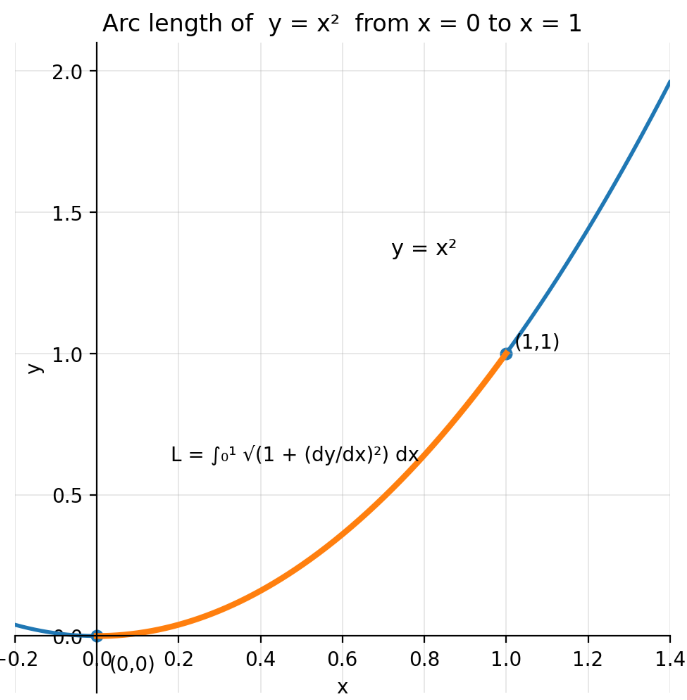
मान लीजिए curve है:
और हमें से तक उसकी length निकालनी है।
सबसे पहले derivative निकालेंगे:
अब formula में रखेंगे:
यह integral वही setup है जो arc length का correct form देता है।
कई बार exam में question का मुख्य उद्देश्य यही होता है कि student सही formula बनाना जानता हो। कुछ questions में exact value निकाली जाती है, और कुछ में केवल expression तक पहुँचना भी महत्वपूर्ण होता है।
इस concept को graph पर देखने से यह बात और clear होती है कि हम curve की actual length निकाल रहे हैं, न कि x-axis पर उसका projection।
Length with respect to y
हर बार curve के रूप में नहीं होती।
यदि curve के रूप में दी गई हो, तो length का formula बदल जाता है।
ऐसी स्थिति में
यह formula तब उपयोगी होता है जब equation naturally के रूप में दी गई हो और के respect में काम करना आसान हो।
Length वाले questions में क्या ध्यान रखें
Arc length वाले प्रश्नों में सबसे पहले यह देखना चाहिए कि curve किस form में दी गई है।
यदि as a function of हो, तो वाला formula use करें।
यदि as a function of हो, तो वाला formula अधिक सरल रहेगा।
यह भी ध्यान रखें कि length का formula area की तरह simple नहीं होता, क्योंकि यहाँ derivative square के अंदर आता है।
इसी कारण length वाले questions अक्सर computationally थोड़े advanced माने जाते हैं।
Volume का basic idea
अब volume की बात करें।
जब किसी plane region को किसी axis के about घुमाया जाता है, तो एक तीन-आयामी solid बनता है। उस solid का volume integration की सहायता से निकाला जाता है।
यहाँ concept यह है कि solid को बहुत पतले-पतले circular discs या washers में बाँट दिया जाए।
फिर प्रत्येक disc का छोटा volume निकालकर integration की मदद से सबका total लिया जाता है।
Volume of Revolution
यदि कोई curve , x-axis, तथा lines और के बीच region बनाती है, और इस region को x-axis के about घुमाया जाता है, तो बनने वाले solid का volume होगा:
क्योंकि rotation के बाद हर vertical strip एक circular disc बनाती है, जिसका radius y होता है।
और disc का area होता है:
इसलिए total volume बनता है:
Example: x-axis के about volume
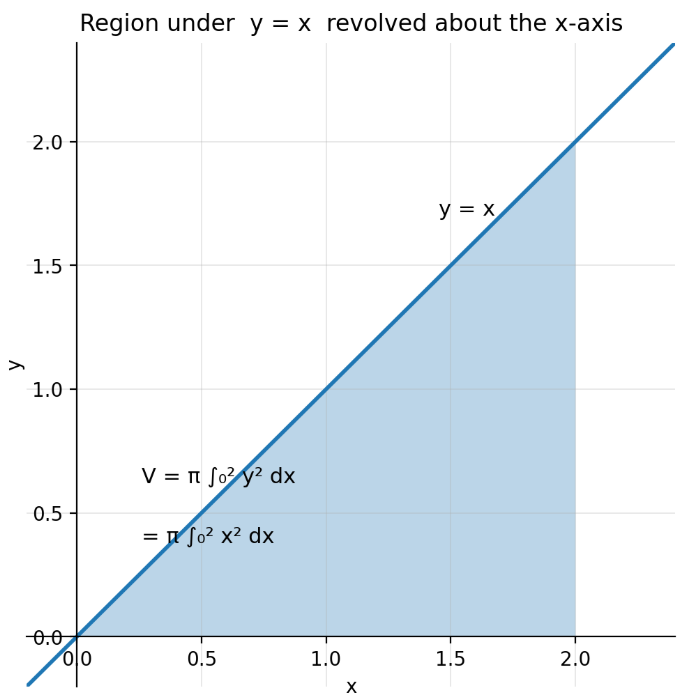
मान लीजिए region curve
x-axis, और से bounded है, और इस region को x-axis के about rotate किया जाता है।
तब volume होगा:
लेकिन यहाँ , इसलिए
अब integration करें:
अतः required volume है:
इस question में यह समझना जरूरी है कि region को rotate करने पर cone जैसा solid बनता है, और definite integral उसी volume को exact form में देता है।
Volume about the y-axis
यदि किसी region को y-axis के about rotate किया जाए, तो method बदल सकती है।
यदि के terms में काम करना convenient हो, तो shell method या appropriate integral form use किया जाता है।
लेकिन basic level पर students को यह समझना जरूरी है कि axis बदलने से radius भी बदलता है, इसलिए formula को ध्यान से चुनना पड़ता है।
यदि curve form में हो और region y-axis के about rotate हो, तो कई बार
का प्रयोग किया जाता है।
इसलिए volume वाले questions में सबसे पहली responsibility यह होती है कि यह पहचाना जाए कि rotation किस axis के about हो रहा है।
Washer Method का idea
कभी-कभी region किसी axis से सीधे start नहीं करता, बल्कि दो curves के बीच bounded होता है।
ऐसे में rotation के बाद solid hollow भी हो सकता है। तब washer method use होती है।
यदि outer radius और inner radius हो, तो volume होगा:
यह formula area between curves के idea जैसा है, लेकिन यहाँ square of radii आता है क्योंकि हम circular cross-sections का area ले रहे होते हैं।
Example: Washer method का simple idea
यदि कोई region दो curves के बीच है और उसे x-axis के about घुमाया जाता है, तो outer curve larger radius देगी और inner curve smaller radius देगी।
तब हर cross-section washer बनेगा, और volume होगा:
यहाँ सबसे common गलती outer और inner radius को उल्टा लेना होती है।
इसलिए graph को समझना बहुत जरूरी है।
Length और Volume में अंतर
यहाँ एक concept clear रखना चाहिए।
Length और volume दोनों integration के applications हैं, लेकिन दोनों का nature अलग है।
- Length में हम curve की actual दूरी निकालते हैं
- Volume में हम 3D solid का occupied space निकालते हैं
Length के formula में derivative आता है, क्योंकि curve की slope को include करना पड़ता है।
Volume के formula में square आता है, क्योंकि cross-sectional area circular form में होता है।
इसलिए दोनों topics को एक साथ पढ़ते समय यह ध्यान रखना चाहिए कि इनके formulas और geometrical meaning अलग-अलग हैं।
Questions solve करने की सामान्य विधि
Length के question में:
पहले curve की equation लिखो।
फिर derivative निकालो।
उसके बाद arc length formula में substitute करो।
फिर limits लगाकर integral solve करो।
Volume के question में:
पहले bounded region identify करो।
फिर यह देखो कि region किस axis के about rotate हो रहा है।
उसके बाद radius तय करो।
फिर सही formula बनाओ।
अंत में definite integral से volume निकालो।
इस topic की मुख्य बात
इस पूरे chapter का सार यह है कि integration केवल area तक सीमित नहीं है।
यह किसी curve की वास्तविक लंबाई और किसी rotated region के actual volume को भी निकाल सकता है।
इसी कारण Length और Volume integration के practical और geometrical applications का बहुत महत्वपूर्ण भाग हैं।
यह topic आगे के chapters जैसे Surfaces, Multiple Integrals, और Volume of solids को समझने की मजबूत foundation भी तैयार करता है।