Two-Dimensional Analytical Geometry का यह सबसे basic और सबसे important topic है। इस भाग में हम यह समझते हैं कि coordinate plane में किसी straight line को algebraic equation की सहायता से कैसे represent किया जाता है।
सीधी रेखा geometry का एक सरल रूप लगती है, लेकिन analytical geometry में इसी topic से slope, inclination, intercept, angle between lines, parallel lines, perpendicular lines, distance और intersection जैसे अनेक important concepts विकसित होते हैं।
यह chapter आगे आने वाले topics जैसे Pair of Straight Lines और Circles की भी foundation तैयार करता है। इसलिए straight line को केवल equation तक सीमित समझना सही नहीं है। यह coordinate geometry का मूल आधार है।
Straight Line का अर्थ
Coordinate plane में जो रेखा हर point पर समान direction रखती है, उसे straight line कहते हैं।
यदि किसी line पर चलते समय direction बदलती नहीं है, तो वह straight line होती है।
Analytical geometry में straight line को एक equation के रूप में लिखा जाता है।
इस equation का उद्देश्य यह बताना होता है कि कौन-कौन से points उस line पर स्थित हैं।
सामान्य रूप में straight line की equation इस प्रकार लिखी जाती है:
जहाँ , , और constants हैं, और तथा दोनों एक साथ zero नहीं हो सकते।
इसी को straight line का general equation कहा जाता है।
Coordinate plane में line को समझना
Coordinate plane में किसी straight line को समझने के लिए दो बातें सबसे महत्वपूर्ण हैं:
- line किस direction में जा रही है
- line axis को कहाँ cut कर रही है
इन्हीं दो बातों से slope और intercept का concept आता है।
यदि किसी line की equation दी हुई हो, तो उससे line का graph बनाया जा सकता है।
और यदि graph दिया हो, तो उससे line की equation निकाली जा सकती है।
यही analytical geometry की सबसे बड़ी विशेषता है कि algebra और geometry एक-दूसरे से सीधे जुड़ जाते हैं।
Slope का concept
Straight line का सबसे important concept slope है।
Slope यह बताता है कि line कितनी steep है, यानी में change होने पर कितनी तेजी से बदलता है।
यदि किसी line पर दो points और हों, तो slope होगा:
यह formula तभी valid है जब हो।
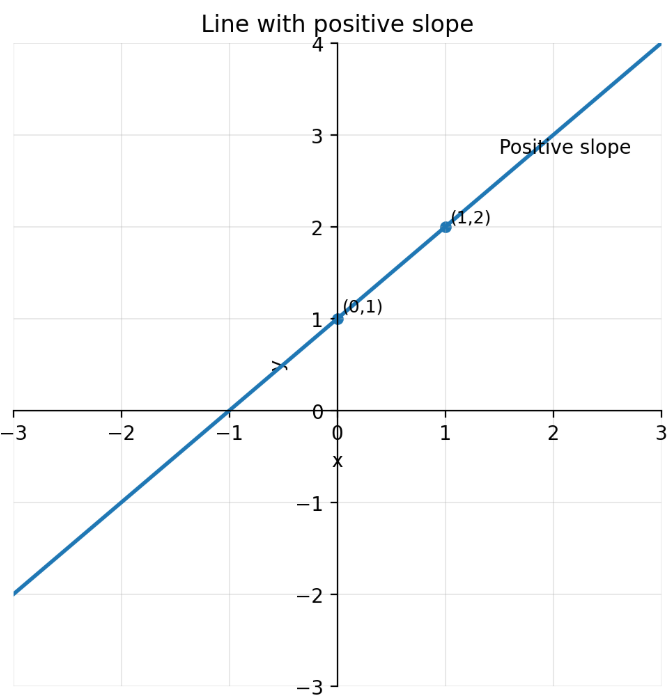
Slope positive, negative, zero या undefined हो सकता है।
- यदि line ऊपर की ओर बढ़ रही हो, तो slope positive होगा
- यदि line नीचे की ओर जा रही हो, तो slope negative होगा
- यदि line horizontal हो, तो slope zero होगा
- यदि line vertical हो, तो slope undefined होगा
Inclination of a line
किसी straight line का x-axis के positive direction के साथ जो angle बनता है, उसे उसका inclination कहते हैं।
यदि inclination हो, तो slope और inclination के बीच relation होता है:
यह relation बहुत important है, क्योंकि इससे angle और slope का सीधा संबंध स्थापित होता है।
यदि angle ज्ञात हो, तो slope निकाला जा सकता है।
और यदि slope ज्ञात हो, तो angle निकाला जा सकता है।
Slope-Intercept Form
यदि किसी line का slope m हो और वह y-axis को c पर cut करती हो, तो उसकी equation होगी:
इसे slope-intercept form कहा जाता है।
यह form बहुत useful है, क्योंकि इसमें line का slope और y-intercept दोनों सीधे दिखाई देते हैं।
Example
यदि किसी line की equation हो:
तो इसका slope है:
और y-axis intercept है:
इसका मतलब line y-axis को पर cut करती है।
Point-Slope Form
यदि किसी line का slope m ज्ञात हो और वह point से गुजरती हो, तो उसकी equation होती है:
इसे point-slope form कहते हैं।
यह form तब बहुत useful होती है जब किसी line का slope और उस पर स्थित एक point दिया गया हो।
Example
Find the equation of the line passing through and having slope .
Formula लगाएँ:
अब simplify करें:
अतः required equation है:
Two-Point Form
यदि line दो points और से गुजरती हो, तो उसकी equation होती है:
इसी को two-point form कहा जाता है।
Example
Find the equation of the line passing through and .
सबसे पहले slope निकालें:
अब point-slope form use करें:
अतः required equation है:
Intercept Form
यदि कोई line x-axis को पर और y-axis को पर cut करती हो, तो उसकी equation होती है:
इसे intercept form कहते हैं।
यह form तब उपयोगी होती है जब line के दोनों intercepts दिए हों।
Example
यदि line x-axis को पर और y-axis को पर cut करती है, तो equation होगी:
अब 4 से multiply करें:
अतः required equation है:
General Form of a Straight Line
Straight line की सबसे general equation होती है:
यह form सबसे common है और कई बार questions में line इसी रूप में दी जाती है।
इस form से slope निकालने के लिए equation को slope-intercept form में बदला जाता है।
यदि
तो
अतः slope है:
Parallel Lines
दो lines parallel होती हैं यदि उनका slope same हो।
अर्थात यदि two lines के slopes और हों, तो parallel होने की condition है:
General form और में parallel होने की condition है:
Example
Check whether lines
and
are parallel or not.
यहाँ
लेकिन
अतः lines parallel हैं।
Perpendicular Lines
दो lines perpendicular होती हैं यदि उनके slopes का product हो।
अर्थात condition है:
Example
यदि एक line का slope है, तो उसके perpendicular line का slope होगा:
क्योंकि
यह relation बहुत important है, विशेष रूप से equation finding questions में।
Angle Between Two Lines
यदि दो lines के slopes और हों, तो उनके बीच angle होगा:
यह formula तब use होता है जब दो lines के बीच acute angle निकालना हो।
Example
यदि और , तो
इसी से angle निकाला जा सकता है।
यह concept exam में short और long numerical दोनों में पूछा जा सकता है।
Equation of Line Parallel to a Given Line
यदि किसी line का slope m हो और हमें उसके parallel किसी दूसरी line की equation निकालनी हो, तो नई line का slope भी वही होगा।
Example
Find the equation of the line passing through (1,2) and parallel to
दी गई line का slope है।
अतः required line का slope भी होगा।
अब point-slope form लगाएँ:
अतः required equation है:
Equation of Line Perpendicular to a Given Line
यदि किसी line का slope m हो, तो उसके perpendicular line का slope होगा:
Example
Find the equation of the line passing through (2,1) and perpendicular to
दी गई line का slope 2 है।
अतः perpendicular line का slope होगा:
अब point-slope form लगाएँ:
अतः required equation है:
Distance of a Point from a Line
यदि point हो और line की equation
हो, तो point से line की perpendicular distance होती है:
Example
Find the distance of point (1,2) from line
Formula लगाएँ:
अतः required distance है:
Condition of Collinearity
यदि तीन points एक ही straight line पर स्थित हों, तो उन्हें collinear कहा जाता है।
तीन points के collinear होने की condition यह है कि उनके द्वारा बना triangle का area zero हो।
या slope method से भी check किया जा सकता है:
यदि
तो points collinear होंगे।
Section Formula का संबंध
Straight line chapter में section formula भी indirectly बहुत important होता है, क्योंकि इसी की सहायता से line segment को किसी given ratio में divide करने वाला point निकाला जाता है।
यदि point और को ratio में internally divide करे, तो point होगा:
यह concept coordinate geometry के कई numerical questions में useful होता है।
Questions solve करने की सामान्य विधि
Straight line वाले questions में सबसे पहले यह देखना चाहिए कि question में क्या given है:
- slope दिया है
- point दिया है
- दो points दिए हैं
- intercepts दिए हैं
- parallel या perpendicular condition दी गई है
- distance निकालनी है
- angle निकालना है
इसके बाद उसी के अनुसार सही formula choose करना चाहिए।
इस chapter में difficulty अक्सर formula में नहीं, बल्कि सही form identify करने में होती है।
इस topic की मुख्य बात
Straight Lines coordinate geometry का आधार है।
इस chapter में line की equation, slope, inclination, angle, intercept, parallelism, perpendicularity और distance जैसे concepts पढ़ाए जाते हैं।
यदि यह chapter अच्छे से समझ लिया जाए, तो आगे Pair of Straight Lines और Circles को समझना काफी आसान हो जाता है।
इसी कारण यह topic short और long numerical questions दोनों के लिए अत्यंत महत्वपूर्ण माना जाता है।