Two-Dimensional Analytical Geometry में Pair of Straight Lines एक important topic है। इसमें हम यह पढ़ते हैं कि एक single equation कब दो straight lines को represent करती है।
जहाँ Straight Lines chapter में एक line की equation, slope, intercept, angle और distance पढ़ी जाती है, वहीं इस topic में दो lines की combined form को समझा जाता है।
यह topic विशेष रूप से second degree equation से जुड़ा होता है। कई बार कोई quadratic equation वास्तव में किसी curve को नहीं, बल्कि दो straight lines के pair को represent करती है। इसलिए इस chapter का मुख्य उद्देश्य equation को पहचानना और उससे दोनों lines की information निकालना होता है।
Pair of Straight Lines का अर्थ
जब एक ही equation से दो अलग-अलग straight lines represent हों, तो उसे pair of straight lines कहते हैं।
उदाहरण के लिए,
यह equation दो factors में written है।
अब zero product rule के अनुसार,
अर्थात यह equation दो straight lines को represent करती है:
इसी को pair of straight lines कहा जाता है।
इस graph को देखने से concept तुरंत clear हो जाता है।
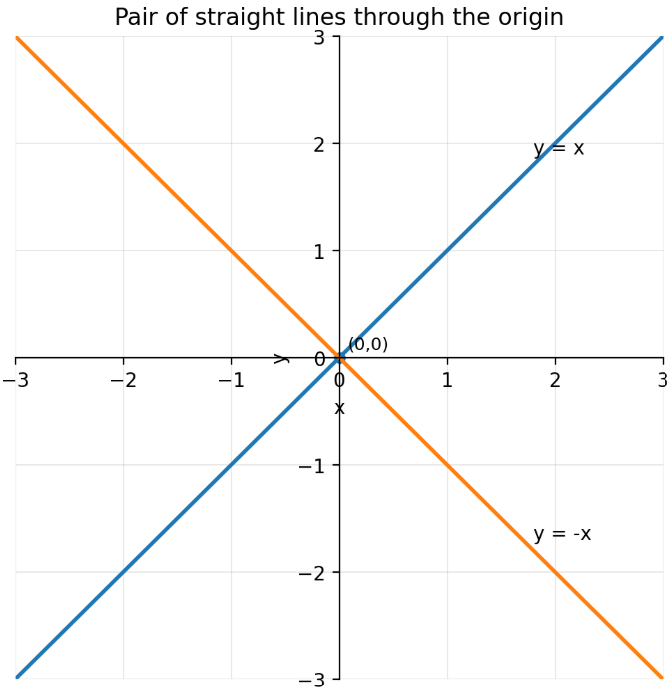
Graph: Pair of straight lines through the origin
Combined Equation of Two Lines
यदि दो lines की equations हों:
तो इन दोनों की combined equation होगी:
यही pair of straight lines की सबसे basic form है।
Example
यदि दो lines हैं:
तो combined equation होगी:
अतः required combined equation है:
यह example बहुत basic है और इसी से chapter की शुरुआत समझनी चाहिए।
Homogeneous Second Degree Equation
यदि equation second degree की हो और उसमें सभी terms same degree की हों, तो उसे homogeneous second degree equation कहते हैं।
इसका general form होता है:
यह form हमेशा origin से passing pair of straight lines को represent करती है, provided कि lines real हों।
ऐसी equation को इस रूप में समझा जाता है कि दोनों lines origin से गुजरती हैं।
Example
मान लीजिए equation है:
अब factor करें:
अतः equation represent करती है:
यानी दो straight lines हैं:
इस प्रकार homogeneous second degree equation को factor करके pair of lines प्राप्त की जाती हैं।
Pair of Lines through the Origin
यदि pair of straight lines origin से गुजरती हों, तो उनकी equation सामान्यतः homogeneous second degree form में होती है।
ऐसी equations में constant term या first degree terms नहीं होते।
इसीलिए origin को satisfy करना naturally possible होता है।
Example
को factor करें:
अतः lines हैं:
दोनों lines origin से pass करती हैं।
यह pair chapter का सबसे standard example है।
Slopes of the Two Lines
Homogeneous second degree equation
में यदि हम रखें, तो equation बनती है:
अब के लिए,
इस quadratic equation से lines की slopes मिलती हैं।
यह method तब useful होता है जब factorization तुरंत possible न हो।
Example
यदि equation है:
तो यहाँ
अब slope equation होगी:
Factor करें:
अतः slopes हैं:
इससे lines मिलती हैं:
जो factorization से भी वही result देती हैं।
Angle Between the Two Lines
यदि pair of straight lines की slopes और हों, तो उनके बीच angle होगा:
यह formula वही है जो straight lines chapter में two lines के angle के लिए use होता है।
लेकिन यहाँ slopes उसी pair equation से निकाली जाती हैं।
Example
यदि lines हों:
तो slopes हैं:
अब
यहाँ denominator zero हो जाता है, इसलिए angle होगा।
अतः दोनों lines perpendicular हैं।
यह result graph से भी clear दिखता है।
Condition for Real and Distinct Pair of Lines
Equation
real and distinct pair of straight lines represent करेगी यदि
यदि
तो lines coincident होंगी।
और यदि
तो real pair नहीं मिलेगा।
यह condition pair of lines की nature समझने के लिए बहुत important है।
Example
मान लीजिए equation है:
यहाँ
अब
क्योंकि
अतः equation real and distinct pair of lines represent करती है।
General Second Degree Equation representing Pair of Lines
कई बार equation इस form में दी जाती है:
यह हर बार pair of straight lines नहीं होती।
लेकिन कुछ special conditions में यह two straight lines को represent कर सकती है।
इस general equation के pair of straight lines होने की condition determinant form से check की जाती है:
यह condition chapter का advanced part है, और long numerical questions में पूछी जा सकती है।
Example: General pair of lines
मान लीजिए equation है:
अब factorization try करें:
अतः equation बनती है:
इसलिए lines हैं:
यह एक intersecting pair of straight lines है।
इसका graph भी concept को clear करता है।
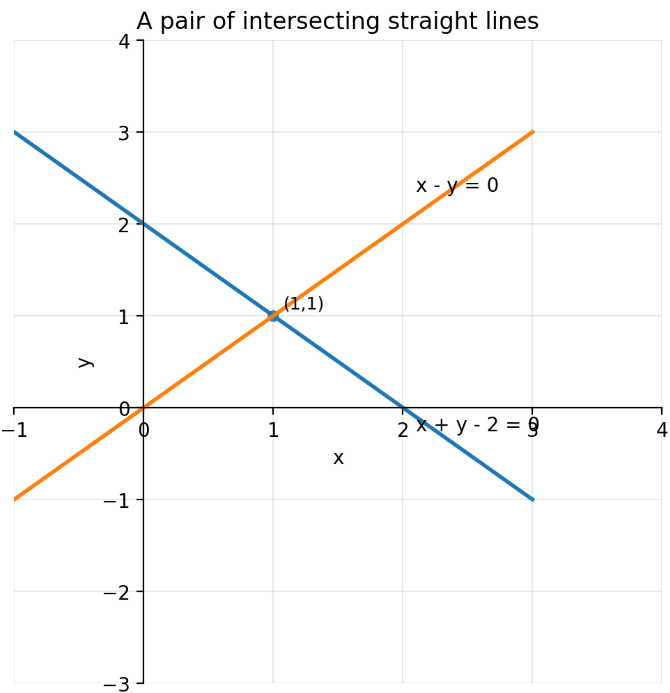
Graph: A pair of intersecting straight lines
Point of Intersection of the Two Lines
यदि pair of lines intersecting हो, तो उनका point of intersection दोनों equations को simultaneously solve करके निकाला जाता है।
ऊपर वाले example में lines हैं:
और
पहली equation से:
अब दूसरी में रखें:
अतः point of intersection है:
Coincident Lines का concept
यदि pair of straight lines वास्तव में same line को दो बार represent करे, तो उन्हें coincident lines कहते हैं।
उदाहरण के लिए,
यहाँ दोनों factors same हैं, इसलिए केवल एक ही line है:
लेकिन algebraically यह pair of straight lines की repeated form मानी जाती है।
इस case में angle between lines zero होता है।
Pair of Lines की पहचान कैसे करें
किसी equation को देखकर यह decide करने के लिए कि वह pair of straight lines है या नहीं, निम्न बातों पर ध्यान देना चाहिए:
- यदि equation product form में factor हो जाए, तो सीधा pair मिल जाएगा
- यदि equation homogeneous second degree हो, तो वह origin से passing pair हो सकती है
- यदि equation general second degree form में हो, तो determinant condition check करनी होती है
- यदि factorization possible हो, तो वही सबसे आसान तरीका है
इसीलिए इस chapter में algebraic simplification बहुत important हो जाती है।
Questions solve करने की सामान्य विधि
Pair of Straight Lines वाले questions में सबसे पहले equation की form पहचाननी चाहिए।
यदि equation homogeneous second degree form में हो, तो factorization या slope method use करना चाहिए।
यदि equation general quadratic form में हो, तो पहले उसे simplify करना चाहिए और देखना चाहिए कि factorization possible है या नहीं।
यदि equation factors में टूट जाए, तो दोनों straight lines अलग-अलग मिल जाती हैं।
फिर आवश्यकता अनुसार angle, slopes, intersection point या nature निकाला जा सकता है।
इस topic की मुख्य बात
Pair of Straight Lines chapter में हम यह सीखते हैं कि एक second degree equation दो straight lines को कैसे represent कर सकती है।
इसमें homogeneous second degree equation, combined equation, slopes of the two lines, angle between them, real-distinct या coincident nature, और general pair of lines जैसे concepts शामिल होते हैं।
यह topic coordinate geometry का advanced लेकिन बहुत logical part है।
यदि student factorization और graph दोनों को साथ लेकर चले, तो यह chapter काफी आसान हो जाता है।