Introduction (परिचय)
जब भी आप computer में कोई program run करते हैं, तो वह सिर्फ program नहीं रहता —
वह एक Process बन जाता है।
Program = passive (static file)
Process = active (running program)
Process क्या होता है
Process एक program का execution होता है।
यानी जब program memory में load होकर run होता है, तो उसे process कहते हैं।
Simple Definition
Process = Program in execution
Program vs Process (Important)
| Program | Process |
|---|---|
| Static (file) | Dynamic (running) |
| Disk में stored | Memory में execute |
| Passive | Active |
Process Memory Layout (बहुत important)
एक process memory में अलग-अलग भागों में divide होता है:
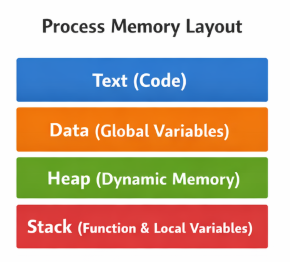
1. Text Section
- Program code (instructions)
2. Data Section
- Global variables
3. Heap
- Dynamic memory allocation
4. Stack
- Function calls, local variables
Process States (Life Cycle)
Process execution के दौरान अलग-अलग states में जाता है:
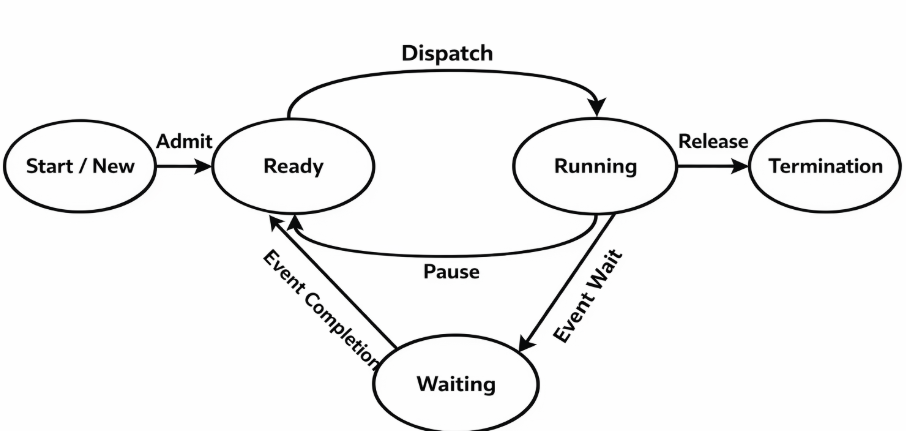
1. New (Creation State)
- जब process पहली बार create होता है
- OS process के लिए resources allocate करता है
- अभी process execution शुरू नहीं हुआ है
Example:
आपने program run किया → process create हुआ
2. Ready (Ready Queue State)
- Process ready है execution के लिए
- लेकिन CPU available नहीं है
- Process ready queue में wait करता है
Important:
यहाँ process wait करता है CPU के लिए, I/O के लिए नहीं
Example:
Multiple apps open हैं → सभी ready queue में
3. Running (Execution State)
- Process को CPU मिल गया
- अब process actively execute हो रहा है
केवल एक process एक समय में CPU use करता है
Example:
आपका browser अभी active है → running state
4. Waiting (Blocked State)
- Process CPU छोड़कर I/O operation के लिए wait करता है
- जैसे file read, keyboard input
Example:
Program data load होने का इंतजार कर रहा है
5. Terminated (Exit State)
- Process का execution complete हो गया
- OS उसके resources release कर देता है
Example:
Program close हो गया
Process Control Block (PCB)
PCB एक data structure है जो OS maintain करता है।
इसमें process की सारी information होती है:
- Process ID
- Process state
- CPU registers
- Memory information
- Scheduling information
Process Operations
OS process पर कई operations perform करता है:
- Process creation
- Process termination
- Process suspension
- Process resumption
Example (समझने के लिए)
मान लो आप browser open करते हैं:
- Browser program → memory में load हुआ
- Process बना
- CPU उसे execute कर रहा है
अब browser एक process है
Key Points
- Process = running program
- OS process को manage करता है
- PCB बहुत important concept है
- Process states exam में पूछा जाता है
Conclusion
Process Concept Operating System का foundation है।
यह समझना जरूरी है कि program execution कैसे होता है और OS उसे कैसे manage करता है।