Integral Calculus का यह एक अत्यंत महत्वपूर्ण topic है। इस भाग में हम यह समझते हैं कि Definite Integral केवल limits के बीच किसी function की value निकालने की प्रक्रिया नहीं है, बल्कि उसका एक स्पष्ट geometrical interpretation भी होता है। यही interpretation आगे चलकर Area determination में प्रयोग किया जाता है।
जब किसी curve, x-axis, y-axis, या दो curves के बीच कोई bounded region बनता है, तब उस region का area ज्ञात करने के लिए definite integral का उपयोग किया जाता है। इसलिए यह topic theory, graph और numerical application—तीनों को एक साथ जोड़ता है।
Definite Integral का अर्थ
Definite Integral वह integral है जिसमें integration fixed limits के बीच किया जाता है। इसका परिणाम एक निश्चित numerical value के रूप में प्राप्त होता है।
इसे सामान्य रूप में इस प्रकार लिखा जाता है:
यहाँ lower limit है, upper limit है, और वह function है जिसका integration किया जा रहा है।
यदि , का antiderivative हो, तो
यही definite integral का मूल सिद्धांत है।
Definite Integral का geometrical meaning
अब इसकी सबसे important बात समझिए।
यदि curve , interval में x-axis के ऊपर स्थित हो, तो
curve, x-axis, तथा lines और के बीच बने region का area देता है।
अर्थात,
यह relation तभी सीधे लागू होता है जब curve पूरे interval में x-axis के ऊपर हो।
Curve के नीचे area निकालना
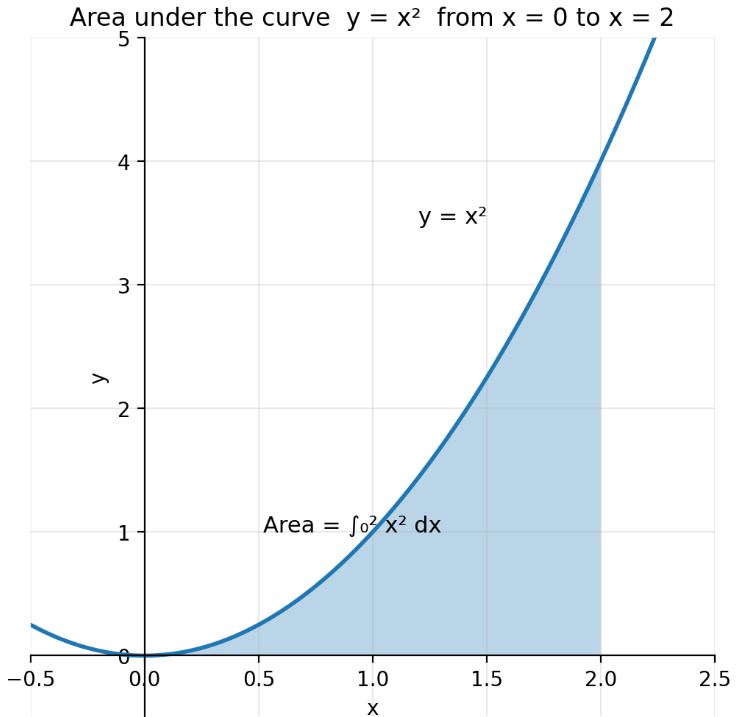
जब curve x-axis के ऊपर हो, तब उसके नीचे का area definite integral से निकाला जाता है। इस स्थिति में हम curve के नीचे बहुत छोटे-छोटे vertical strips की कल्पना करते हैं। प्रत्येक strip का area लगभग होता है। इन सभी strips का योग total area देता है।
इसलिए formula होता है:
Example
यदि curve
और limits से तक दी गई हों, तो area होगा
अब integration करने पर,
इसलिए,
अतः required area है
इस concept को graph में देखना और भी useful होता है, क्योंकि shaded region साफ दिखाई देता है।
जब curve x-axis के नीचे हो
यदि curve x-axis के नीचे स्थित हो, तो function की values negative होंगी। ऐसी स्थिति में definite integral की value भी negative आती है। लेकिन area कभी negative नहीं माना जाता। इसलिए actual area निकालते समय modulus लिया जाता है।
अर्थात,
Example
यदि
और limits से तक हों, तो
लेकिन actual area होगा
यहाँ यह समझना आवश्यक है कि definite integral की value और geometrical area हमेशा same sign में नहीं होते।
Signed Area और Actual Area
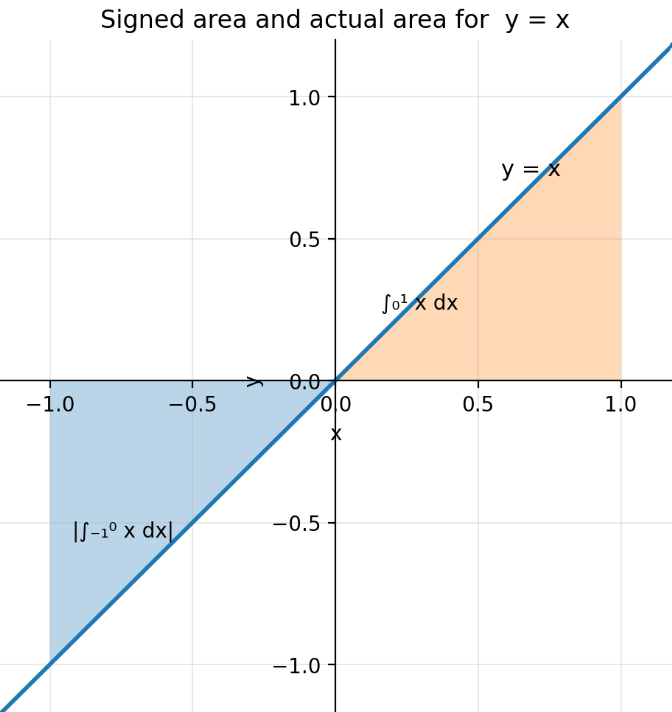
यह distinction बहुत महत्वपूर्ण है।Definite Integral कई बार actual area नहीं, बल्कि signed area देता है।
इसका अर्थ है:
- x-axis के ऊपर का भाग positive माना जाता है
- x-axis के नीचे का भाग negative माना जाता है
इसी कारण कभी-कभी definite integral की कुल value zero आ सकती है, जबकि actual enclosed area zero नहीं होता।
Example
मान लीजिए,
और limits से तक दी गई हैं।
तब definite integral होगा:
लेकिन actual area zero नहीं है।
क्योंकि से तक graph x-axis के नीचे है और से तक ऊपर है।
इसलिए actual area होगा:
अतः actual area है
इस difference को graph की मदद से बहुत आसानी से समझा जा सकता है।
जब curve x-axis को काटता हो
यदि कोई curve interval के बीच x-axis को cut करता है, तो पूरा area एक ही integral से नहीं निकाला जाना चाहिए।
क्योंकि कुछ भाग positive होगा और कुछ negative, और दोनों एक-दूसरे को cancel कर सकते हैं।
ऐसे questions में सही तरीका यह है:
- पहले उन points को निकालो जहाँ curve x-axis को cut करता है
- फिर interval को अलग-अलग parts में बाँटो
- हर part का area अलग निकालो
- अंत में सभी areas को जोड़ दो
यही actual area देता है।
दो curves के बीच area
कई बार area किसी curve और x-axis के बीच नहीं, बल्कि दो curves के बीच bounded होता है।
ऐसी स्थिति में upper curve और lower curve का अंतर लिया जाता है।
यदि दो curves और दी गई हों, तो area होगा
जहाँ upper curve है और lower curve है।
अर्थात area निकालते समय हमेशा
लिखा जाता है।
Upper curve और Lower curve की पहचान
दो curves के बीच area निकालने से पहले यह देखना बहुत आवश्यक है कि interval में कौन-सी curve ऊपर है और कौन-सी नीचे। इसके लिए rough sketch बनाया जाता है। यदि sketch से बात clear न हो, तो interval के भीतर किसी convenient point पर दोनों curves की values compare की जाती हैं।
जिस function की value अधिक होगी, वह upper curve होगी।
जिसकी value कम होगी, वह lower curve होगी।
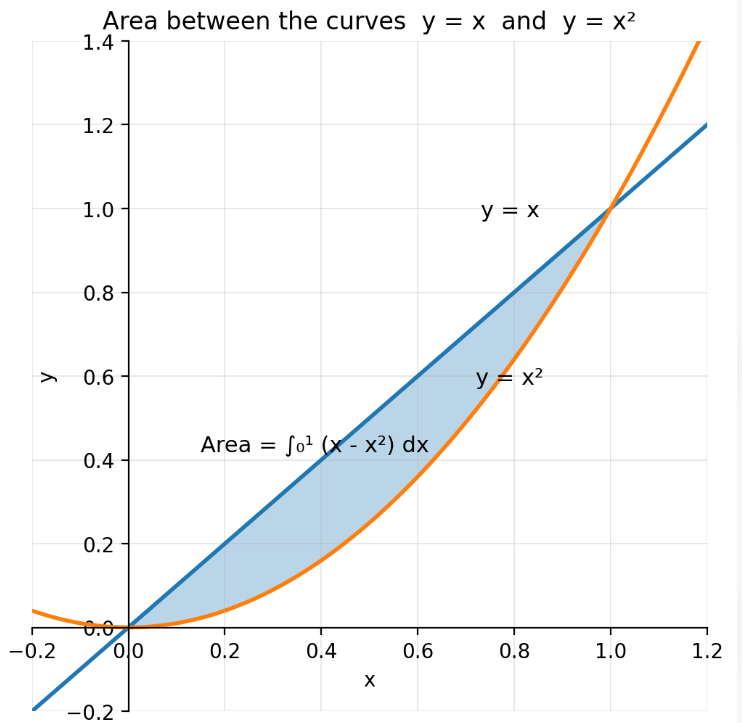
दो curves के बीच area का example
अब एक standard example देखते हैं।
यदि curves हों:
तो सबसे पहले intersection points निकालते हैं।
अतः intersection points हैं:
अब interval से में देखें तो , से ऊपर है।
इसलिए area होगा:
अब integrate करें:
अतः required area है
यह question area between curves का सबसे important basic example है।
Area with respect to y
हर बार integration के respect में करना जरूरी नहीं है।
कुछ questions में के respect में area निकालना अधिक सरल होता है, विशेषकर जब equations के रूप में दी गई हों।
यदि curve के रूप में हो, तो area इस प्रकार लिखा जाता है:
और यदि दो curves तथा दी गई हों, तो
यहाँ upper-lower नहीं, बल्कि right-left का concept लागू होता है।
Example
यदि curves हों:
तो intersection points मिलेंगे:
अब से तक , से right side पर है।
इसलिए area होगा:
अब integration करें:
अतः required area है
Area निकालने की सामान्य विधि
Area वाले questions को solve करते समय एक व्यवस्थित method अपनानी चाहिए।
सबसे पहले curves की equations को ध्यान से लिखना चाहिए।
फिर यह देखना चाहिए कि curves x-axis को या एक-दूसरे को कहाँ cut कर रही हैं। यही points limits निर्धारित करते हैं।
इसके बाद rough sketch बनाना चाहिए, ताकि यह स्पष्ट हो सके कि कौन-सी curve upper है, lower है, right है या left
फिर उसी के अनुसार सही definite integral बनाया जाता है।
अंत में integration करके limits apply की जाती हैं और final answer को area के रूप में positive लिखा जाता है।
Concept की मुख्य बात
इस पूरे topic का सार यह है कि definite integral केवल calculation की technique नहीं है। यह geometry और analysis के बीच एक महत्वपूर्ण संबंध स्थापित करता है। Curve के नीचे या curves के बीच बने bounded region को numerical form में व्यक्त करने का सबसे प्रभावशाली माध्यम definite integral ही है।
इसी कारण यह topic आगे आने वाले topics जैसे Length, Volume, Surface और Multiple Integrals की foundation तैयार करता है।